Vibe Coding vs Traditional Development
Vibe coding vs traditional development explained: what each approach does well, where each one fails, and how to choose the right fit for your project.


There is a fight happening in tech right now. Engineers who spent years learning algorithms and debugging complex systems look at vibe coding and see sloppy, unmaintainable code wrapped in hype. Meanwhile, founders and builders are shipping real products in days with AI tools and not worrying much about whether their code looks like a textbook example.
In short: Vibe coding means describing software in plain English and letting AI generate the code. Traditional development means a developer writes code by hand and understands every line. Neither approach wins every time. The right choice depends on the problem, how fast you need to move, how much security matters, and how long the code has to last.
Key takeaways
- Vibe coding is describing software in plain English and letting AI generate the code, then testing whether it works.
- Vibe coding tools excel at standard patterns like CRUD apps, dashboards, and authentication flows.
- Traditional development is the stronger choice for novel problems, high-performance systems, security-critical applications, and long-term maintenance.
- Tools named in the article include Cursor, Lovable, and Claude Code.
- Judgment about product, architecture, security, and tradeoffs is the skill that matters most now.
- Experienced developers often write critical paths by hand and use AI for boilerplate, tests, and documentation.
What is vibe coding?
Vibe coding is when a builder describes what they want in natural language and AI generates the code. The builder may or may not read every line. They test whether it works and iterate on what does not. The focus is on the outcome, a working product, rather than the craft of elegant code.
What is traditional development?
Traditional development is when a developer or team writes code by hand. They choose languages, frameworks, and architectures on purpose, and they understand every line they write. Humans review, test, and maintain the code, and they know what they are looking at.
Neither of these is a strawman. Both happen in practice, every day.
The debate is not really about which one is better in the abstract. It is about which is better for whom, for what, and when. That is a more useful question.
Why do engineers prefer traditional development?
Engineers who favor traditional development usually point to four things: understanding, complexity, security, and technical debt. Each one matters most when a product is serious and will be around for a long time.
1. You understand what you've built
When you write code yourself, you know exactly what your system does and why. Every decision, from this function to this data structure to this API design, is yours. You can reason about edge cases, predict how the system will behave under unexpected conditions, and debug problems with a complete mental model.
With AI-generated code, you are trusting a black box. The code might work perfectly. It might also have subtle bugs, security vulnerabilities, or architectural decisions that seem fine now but cause serious problems at scale.
2. Complex systems require deep understanding
The best software products in the world, the ones running major financial systems, healthcare infrastructure, and distributed databases, are complex in ways that require real expertise to design and maintain.
Vibe coding tools excel at standard patterns: CRUD apps, dashboards, authentication flows. They struggle with truly novel problems like new algorithms, unusual system requirements, and high-performance distributed systems. For those problems, there is no substitute for developers who deeply understand what they are building.
3. Security is not optional
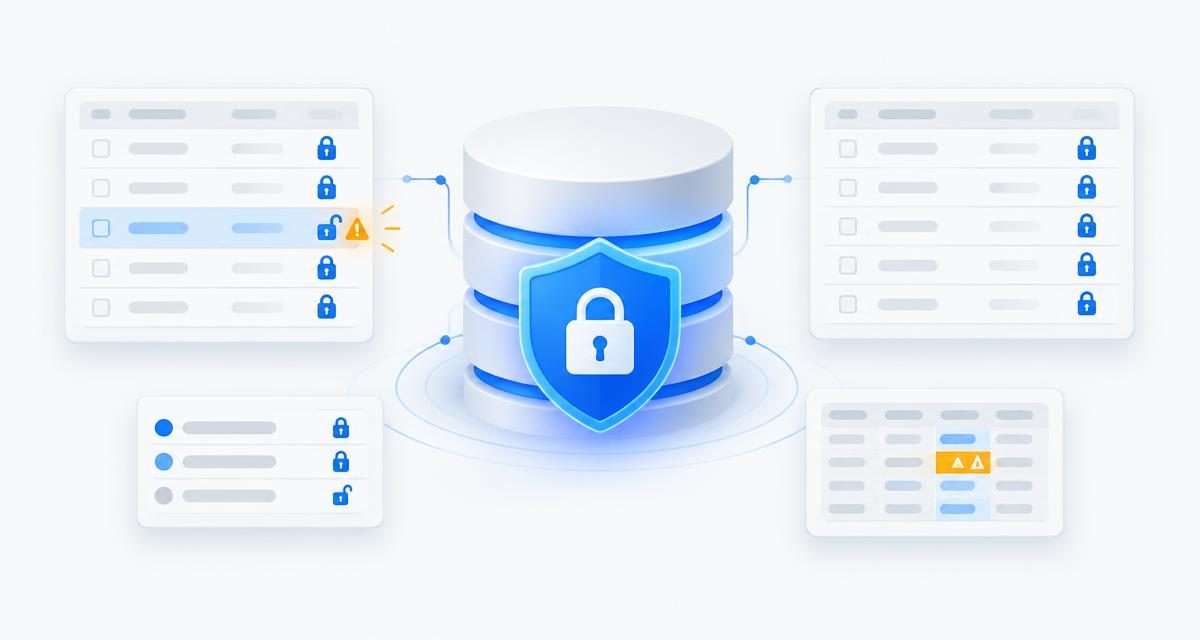
Security vulnerabilities are not obvious when you are not reading your code carefully. SQL injection, authentication bypasses, exposed API keys, and improper data validation are the kinds of issues AI-generated code can introduce, particularly when the builder is not reviewing every line.
For consumer applications that handle user data, payment information, or sensitive business data, a security vulnerability can be catastrophic. Code review, security audits, and penetration testing exist for good reasons.
4. Technical debt compounds
AI-generated code often takes the most straightforward path to a solution, not the most maintainable one. Over time, a codebase built mostly through vibe coding can become a maze of inconsistent patterns, redundant code, and architectural decisions that made sense on their own but create chaos together.
Engineers who inherit such codebases describe the experience as "archaeology." They try to understand decisions they never made, based on logic they never learned.
Why do builders choose vibe coding?
Builders choose vibe coding mainly for speed, for the lower bar of good enough, and for the way the tools keep improving. It also works best as leverage for experienced developers rather than a replacement for them.
1. Speed of iteration is a real competitive advantage
In the early stages of a product, the ability to test ideas quickly is worth more than code quality. A startup that can ship, test, and pivot in days will beat one that spends months building "the right architecture" for a product direction that might be wrong.
Vibe coding speeds up this cycle. What used to take a developer a week can now take a few hours. For founders testing product-market fit, that compression is transformative.
2. The bar for "good enough" is lower than engineers think
For many applications, such as internal business tools, simple SaaS products, and mobile apps serving thousands (not millions) of users, code quality and architectural elegance do not matter much. What matters is that the product works, users can reach their goals, and the business generates revenue.
Engineers often optimize for qualities that users never notice. Vibe coding optimizes for things users do notice. Does the product exist? Does it work? Does it ship before the competitor's does?
3. The tools are getting dramatically better
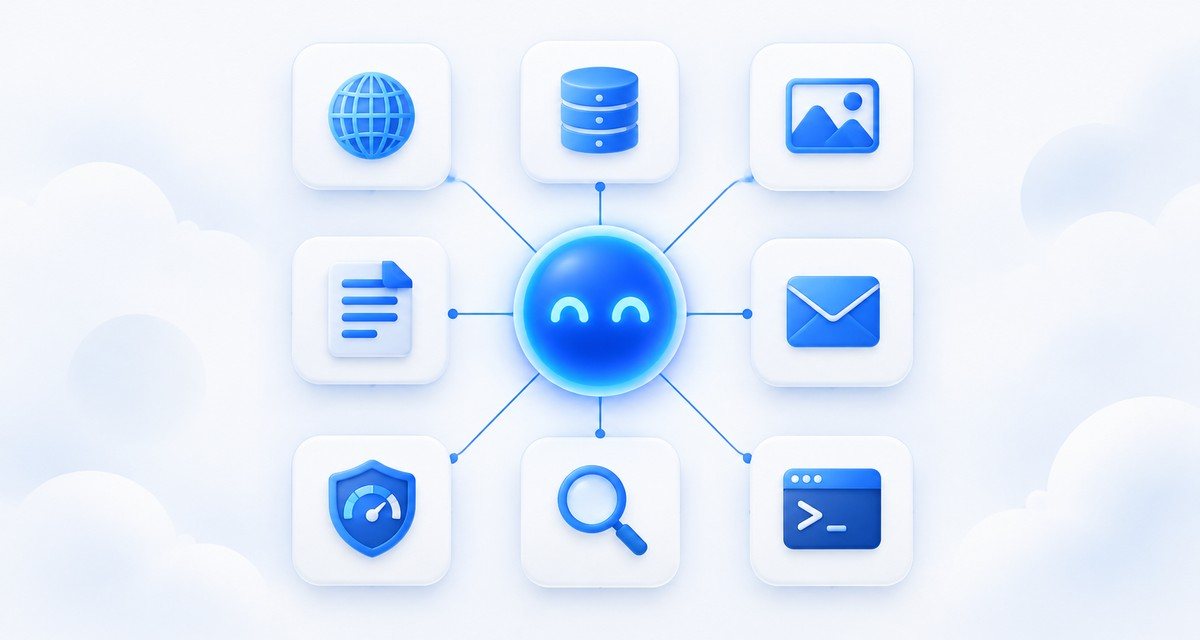
The gap between AI-generated and human-written code is closing faster than most engineers expected. Models like Claude, GPT-4o, and Gemini produce code that is often indistinguishable from what a mid-level developer would write. Tools built on these models, including Cursor, Lovable, and Claude Code, add layers of project understanding and iterative refinement that close the gap further.
Two years ago, vibe coding was a toy. Today, it is viable for production applications. Two years from now, the criticism about code quality will apply to a much narrower set of problems.
4. Vibe coding does not replace developers. It amplifies them
The narrative of "AI replacing developers" misses what is actually happening. The most effective vibe coders are experienced developers who use AI to multiply their output, not to replace their judgment.
A senior developer using Cursor and Claude Code can do the architectural work of a team, with AI handling the boilerplate. That is not replacement. It is leverage. The developers who figure out this leverage first will have a big advantage over those who resist it.
When does vibe coding win?
Vibe coding wins when the problem is well defined and common, when speed matters more than perfection, when the builder has good judgment even without reading every line, and when the project uses well-supported frameworks.
Authentication, CRUD operations, standard UI patterns, and API integrations with common services are all things AI handles reliably because they appear constantly in training data. Early-stage product development, MVPs, proof-of-concepts, internal tools, and hackathon projects are good fits too, anywhere the cost of moving slowly is higher than the cost of imperfect code.
Vibe coding does not make decisions for you. It implements decisions. If you have clear product thinking and can evaluate whether the output does what you want, you can be effective even without deep coding expertise.
Frameworks like React, React Native, Next.js, Supabase, and Firebase are areas where AI has extensive training data and generates reliable code.
When does traditional development win?
Traditional development wins when the problem is novel, when scale and performance are non-negotiable, when security is critical, and when the codebase will be maintained for a long time.
New algorithms, unusual system requirements, and problems without obvious precedents need human creativity and expertise. AI can support that work but cannot replace it. Systems handling millions of requests, requiring sub-millisecond response times, or running on resource-constrained hardware need optimization that AI tools do not consistently produce.
Financial systems, healthcare applications, and platforms with sensitive user data need human experts who understand security at a deep level and take responsibility for the code they ship. Enterprise software, long-lived platforms, and codebases with large engineering teams need consistency, maintainability, and clear architectural patterns that are harder to enforce with AI-generated code.
Which approach should you choose?
Use the table below to compare the two approaches across the factors that usually matter most. Vibe coding fits early stages and standard problems. Traditional development fits growth stages, security-sensitive work, and long-term maintenance.
| Factor | Vibe Coding | Traditional Development |
|---|---|---|
| Timeline | Days to weeks | Weeks to months |
| Code quality | Adequate to good | Good to excellent |
| Maintainability | Lower | Higher |
| Security | Requires careful review | Baked into process |
| Novel problems | Limited | Strong |
| Standard patterns | Strong | Strong |
| Non-technical builder | Viable | Difficult |
| Scale (early stage) | Fine | Overkill |
| Scale (growth stage) | Risky | Appropriate |
| Cost | Lower | Higher |
What skill matters most now?
Judgment matters most. The skill that counts most in the age of vibe coding is not writing code. It is knowing what to build and evaluating whether what was built is any good.
This sounds like common sense, but it has real implications:
- A non-technical founder who deeply understands their users and market can vibe code a better product than a skilled developer who does not know what they are building.
- A developer with strong architectural judgment can use AI to produce better code faster than a developer who uses AI uncritically.
- The ability to look at AI-generated output and say "this works, but it won't scale because..." is more valuable than the ability to write that code from scratch.
Judgment about product, architecture, security, and tradeoffs is the skill that neither approach automates and neither side of the debate can ignore.
What do experienced developers actually do?
Most experienced developers who have tried these tools end up in a more nuanced place than either extreme. The debate is often between two caricatures: the engineer who dismisses AI entirely and the non-technical founder who thinks AI removed the need for engineering knowledge.
In practice, experienced developers tend to do the following:
- They use Cursor or Claude Code to move faster on well-understood problems.
- They write critical paths, such as security logic, data models, and performance-sensitive code, by hand with AI assistance.
- They review AI-generated code more carefully in areas where bugs would be costly.
- They let AI handle boilerplate they would otherwise write mechanically.
- They use AI for tasks they do not enjoy, such as writing tests, documentation, and configuration files.
This is not selling out to vibe coding or resisting progress. It is pragmatic tool use by people with enough expertise to know when each approach fits.
What is the uncomfortable question for traditional developers?
The question is this: if AI can do in hours what took you weeks, what value do you provide? It is worth sitting with that question seriously rather than dismissing it.
For most developers, the honest answer comes down to three things:
- Judgment, architecture, and accountability. AI generates code. Humans decide whether it is the right code, whether the architecture will hold up, and whether the security is acceptable. That judgment becomes more valuable as AI handles more of the implementation.
- Novel problem-solving. For genuinely new products, algorithms, and architectures, human creativity is still essential. AI interpolates from existing patterns. Humans can define new ones.
- Business context. AI does not know your company, your users, your constraints, or your strategy. The developer who understands those things and turns them into technical decisions provides value that is hard to replace.
The developers who will thrive lean into these advantages and use AI for everything else. The ones who will struggle are those who compete with AI on its own terms, which means speed of implementation for well-understood problems.
What are the risks for vibe coders?
The risks are real. Building products on AI-generated code you have not carefully reviewed can lead to problems that show up after launch. The honest question is what happens when the code breaks in production at 2am.
Building on AI-generated code you have not carefully reviewed carries real risks:
- Security vulnerabilities you did not know to look for
- Architectural decisions that seem fine now but create technical debt
- Dependencies that stop being maintained
- Bugs that appear only under specific conditions at scale
The vibe coder who ships fast and gets users has a real advantage in the early stage. The one who has not thought about what happens when the product succeeds may find they cannot scale, secure, or maintain what they built.
Bottom line
The vibe coding vs. traditional development debate is the wrong debate, because it is not a binary choice. Vibe coding speeds up product development, lowers the barrier to entry, and changes what is possible for solo founders and small teams. Traditional development is not going away, since complex systems, security-critical applications, and novel technical problems will keep needing human expertise.
Questions people ask
What is vibe coding?
Vibe coding is describing what you want in plain English and letting AI generate the code. The builder tests whether the result works and keeps iterating on what does not. The focus is on a working product rather than elegant code.
Is vibe coding safe enough for production apps?
The article says vibe coding has moved from a toy to something viable for production applications. It also warns that AI-generated code can introduce security vulnerabilities, especially when the builder is not reviewing every line. Security review matters most for apps that handle user data or payments.
When should you choose traditional development instead?
Traditional development is the better choice when the problem is novel, when scale and performance are non-negotiable, when security is critical, or when the codebase will be maintained for a long time. Those cases need developers who understand every decision in the system.
Which tools are used for vibe coding?
The article names Cursor, Lovable, and Claude Code as tools that add project understanding and iterative refinement. It also mentions Claude, GPT-4o, and Gemini as models that produce code often close to what a mid-level developer would write.
Do you need coding experience to vibe code?
A builder with clear product thinking can be effective without deep coding expertise, because vibe coding implements decisions rather than making them. The builder still needs to judge whether the output does what they want. Non-technical builders find vibe coding viable, while traditional development is listed as difficult for them.